

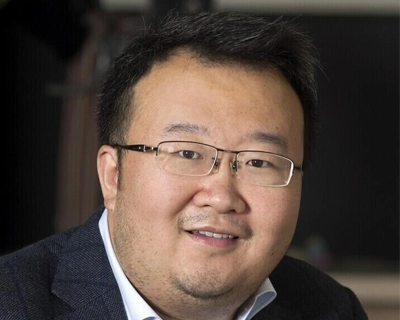
Junhe Lian is Full Professor and Head of the Chair of Forming Technologies & Institute of Metal Forming at RWTH Aachen University, Germany. He received his Dr.-Ing. from RWTH Aachen and previously held positions at Aalto University (Finland) and MIT (USA). He has been awarded an ERC Starting Grant (2023), the Future Makers Award (2023), the ESAFORM Scientific Prize (2020), and various best paper awards. His research focuses on advancing material forming technologies by integrating experimental characterization, physics-based modeling, and data-driven engineering. He serves as Associate Editor of the International Journal of Material Forming and Board Member of ESAFORM.
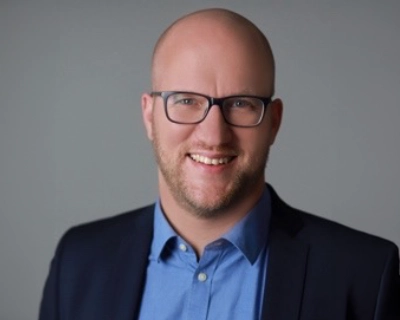
David Bailly, born in 1984, studied mechanical engineering at RWTH Aachen University (graduating in 2010) and then completed his doctorate in the field of forming technology under Prof. G. Hirt (doctorate in 2016). Since 2015, he is chief engineer at the Institute of Metal Forming at RWTH Aachen University and responsible for the scientific fields of strip casting, bulk metal forming and sheet metal forming as well as for the technical infrastructure and administrative matters.
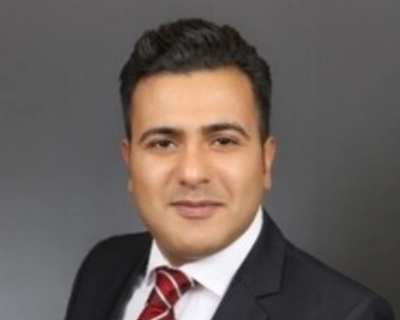
Dr.-Ing. Emad Scharifi is chief engineer at the Institute of Metal Forming (IBF) at RWTH Aachen University, where he contributes both to research activities and to the scientific management of projects. He completed Ph.D. at University of Kassel (GER) and M.Sc. in Mechanical Engineering, University of Duisburg-Essen (GER). He worked at the Department of Microstructure Physics and Alloy Design, Max-Planck-Institute for Iron Research, Duesseldorf (GER).
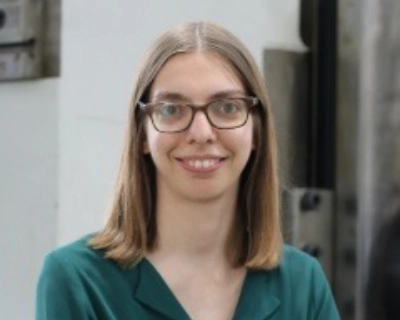
Annemarie Heiser is a doctoral candidate and group manager in the Flat & Long Products research group at the Institute of Metal Forming (IBF). She earned her M. Sc. in Materials Engineering from RWTH Aachen University. Her research focuses on damage evolution in hot forming processes. She is also the scientific manager for the rolling mills at IBF.
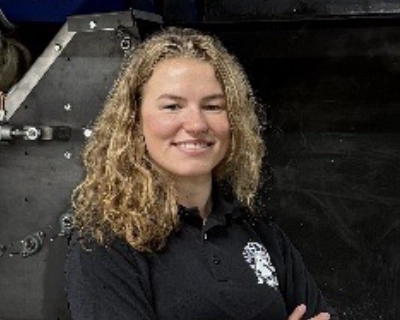
Dorothea Czempas is a doctoral candidate and group manager of the Strip Casting research group at the Institute of Metal Forming (IBF) at RWTH Aachen University. She studied Business Administration and Engineering: Materials and Process Engineering at RWTH Aachen University. Her research focuses on the strip casting of electrical steel.
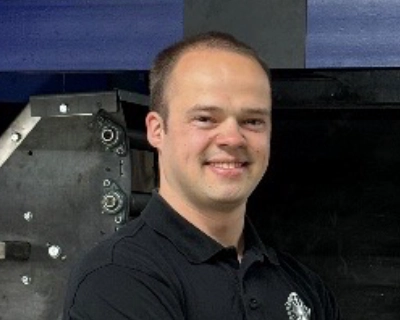
Sebastian Häner is a doctoral candidate in the Strip-casting research group at the Institute of Metal Forming (IBF). He earned his M.Sc. In Materials Engineering from RWTH Aachen University. His research focuses on the recycling of different materials and the casting and processing of light metals.